|
The Apes of Wrath
|
I was disappointed in the computer animation in Rise of The Planet of the Apes. The apes were much smaller than I expected. They moved unlike any apes I’d ever seen. They made funny noises, had big noses, and were very cartoonish. However, after a few minutes, I realized that I was the wrong theater and was watching The Smurfs. After a brief scuffle with management, I settled down with my popcorn to watch the Rise of the Planet of the Apes. However, after a few minutes, I realized I was in the wrong theater and should have stayed with The Smurfs. Rise of the Planet of the Apes starts in San Francisco where I became immediately cognizant of the fact that there weren’t any gays, Deadheads, or Chinese people. I am perfectly willing to suspend my disbelief regarding intelligent chimpanzees. However, a complete lack of representation of native San Franciscans required quite a bit of credulity on my part. James Franco plays a scientist. His character has a name, but that’s unimportant. So is his love interest. Neither of them gives a decent performance. The CGI apes are more animated than the two of them. In any case, he’s developed a cure for Alzheimer’s, and then things go bad, and then Caesar and the apes take over. Other than that, there isn’t much to tell. The first act is Curious George. The second act is The Chimpshank Redemption. The third act is a just a cheesy video game set on the Golden Gate Bridge. Now, I love Science Fiction. I grew up on the original Planet of the Apes films. They had style, charm, wit, humor, action, and a message. The new film, well, CGI apes of all shapes and sizes run amuck and we are treated to quite a display of ape on ape action. All that is well and good, but where’s the message? Let’s backtrack a bit. The original book La Planete des Singes was written by French author Pierre Boulle (pronounced Boulle). It was a clever satire on what makes us human. The screenplay was written by Rod Serling (pronounced Serling) and it was a reflection of the time in which it was written. It dealt with humanity, science vs. blind faith, and the horror of nuclear war. Conquest of the Planet of the Apes, the film that introduced Caesar, also dealt with themes that mirrored societal ills such as civil unrest and revolution. The riots of Watts, Detroit, and Newark are represented in Science Fiction in a way that no documentary can truly attest. Science Fiction films generally have a lot to say about us. They have a tradition of social satire and commentary. Invasion of the Body Snatchers dealt with cold war paranoia. Gattaca touched upon eugenics. Soylent Green and Logan’s Run focused on overpopulation. Even Star Wars, the ultimate in escapist entertainment, addresses the nature of good and evil and even manages to add a touch of spirituality. Which brings us back to Rise of the Planet of the Apes. After watching it, I can honestly say that I have no fear of apes whatsoever. However, I fear that Alzheimer’s research will be set back by 20 years. The basic theme of Rise is that “Science is bad”. Apparently, we shouldn’t mess with things we don’t understand. We shouldn’t attempt to cure diseases. Some things aren’t meant to be. It therefore
should come as no surprise that 20th Century Fox belongs to Rupert Murdoch’s News Corporation, the parent company of
Fox News. Anyone who complains that Hollywood is a hotbed of liberal elitism needs to see this movie. Rise of the Planet
of the Apes is a conservative party line, anti-science rant, in which minorities are conveniently air-brushed out. Let’s
face it, the only way to make it more obvious would be to put tri-cornered hats on the apes and put misspelled signs in their
hands. Political and religious aspects aside, however, the greater crime is the “dumbing down” of the franchise. When producer Richard Zanuck approved the original Planet of the Apes, he pulled out all the artistic stops he could. The John Chambers makeup was a revolution in the industry. Rod Serling’s screenplay and surprise ending is worthy of anything he ever developed for The Twilight Zone. The cast included two Academy Award winners in Charlton Heston and Kim Hunter. Maurice Evans brings his full Shakespearean gravitas to Dr. Zaius. Roddy McDowall, Academy Award nominee, has become the icon of the films. The original series was high-concept, thoughtful, carefully crafted, and entertaining as well. The Planet of the Apes franchise saved 20th Century Fox from near bankruptcy after the financial disaster of Doctor Dolittle. In doing so, Richard Zanuck raised the prestige of the studio. That would have made his father, Darryl Zanuck, very proud.
The elder Zanuck was a maverick in the industry and produced “message” pictures for the Warner Brothers such as I Am a Fugitive from a Chain Gang. When he took control of 20th Century Fox, Zanuck took on anti-Semitism with Gentleman's Agreement and racism with Pinky. Zanuck’s crowning achievement was the film version of John Steinbeck’s novel, The Grapes of Wrath. You see, back in the day, there was once a time when films were made from books written by acclaimed authors. Motion pictures relied on trained actors who studied their craft. What little artifice that existed was put into the loving hands of masters of make-up, costuming, and cinematography. Directors followed their vision. Producers were actual people who loved film almost as much as profit. There were giants in those days. And audiences, well, they were given respect. They were treated not only to broad entertainment, but to a whole host of ideas that challenged their minds and created conversation long after the popcorn ran out. As I watched the flickering images of computer generated apes, I couldn’t help but wonder if we’ve entered a new age where none of that matters. Studios are owned by multinational corporations with political agendas. At best, actors have been reduced to the Hitchcock definition of “cattle”. They are corralled into a scene and later manipulated with special effects. A generation of directors has grown up on video games. They know how to film the action, but can’t tell a story. In the final scene, Caesar climbs a redwood tree and looks out over the destruction he and his ape cohorts have wrought. As I looked over his shoulder, I too could view the destruction. The giants of yesterday are gone. From here on out, we’re going to be living in a planet full of Smurfs.
|
 |
|
|
|
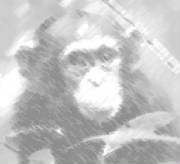
It's a madhouse!
|